


The way people buy and sell products and services has changed significantly with the rise of online marketplaces. Instead of building a traditional eCommerce store, entrepreneurs today can create platforms where multiple vendors sell their products or services under one digital marketplace.
However, choosing the right marketplace niche idea is one of the biggest challenges for new entrepreneurs. A successful marketplace requires more than just connecting buyers and sellers; it needs a business idea with strong demand, scalability, and long-term revenue potential.
In this guide, we explore the top online multi-vendor marketplace business ideas for entrepreneurs looking to start a digital venture in 2026.
An online multi-vendor marketplace is a digital platform where multiple sellers can showcase and sell their products or services through a single online store. It allows customers to explore different vendors in one place, while the platform owner manages the website, payment systems, and overall operations
Key Takeaways
- Multi-vendor marketplaces allow multiple sellers to offer products or services through one platform, while the owner manages operations, payments, and marketplace growth.
- Entrepreneurs can explore opportunities across industries such as food delivery, healthcare, rentals, B2B, education, travel, fitness, and professional services.
- Successful marketplaces generate revenue through multiple streams, including commissions, vendor subscriptions, listing fees, advertising, and premium services.
- Choosing the right marketplace idea requires evaluating market demand, target users, competition, vendor availability, and revenue potential.
Table of Contents
How an Online Multi-Vendor Marketplace Works
An online multi-vendor marketplace works through a series of steps that connect vendors, customers, and the platform. Instead of selling its own products, the marketplace provides the technology and infrastructure that allow vendors to list and sell their products or services.
The platform owner manages the website, payment processing, user management, and overall marketplace operations, while each vendor remains responsible for managing inventory, pricing, and order fulfillment. Well-known examples of this business model include Amazon, Etsy, and eBay.
A multi-vendor marketplace follows a straightforward workflow that benefits both sellers and buyers.
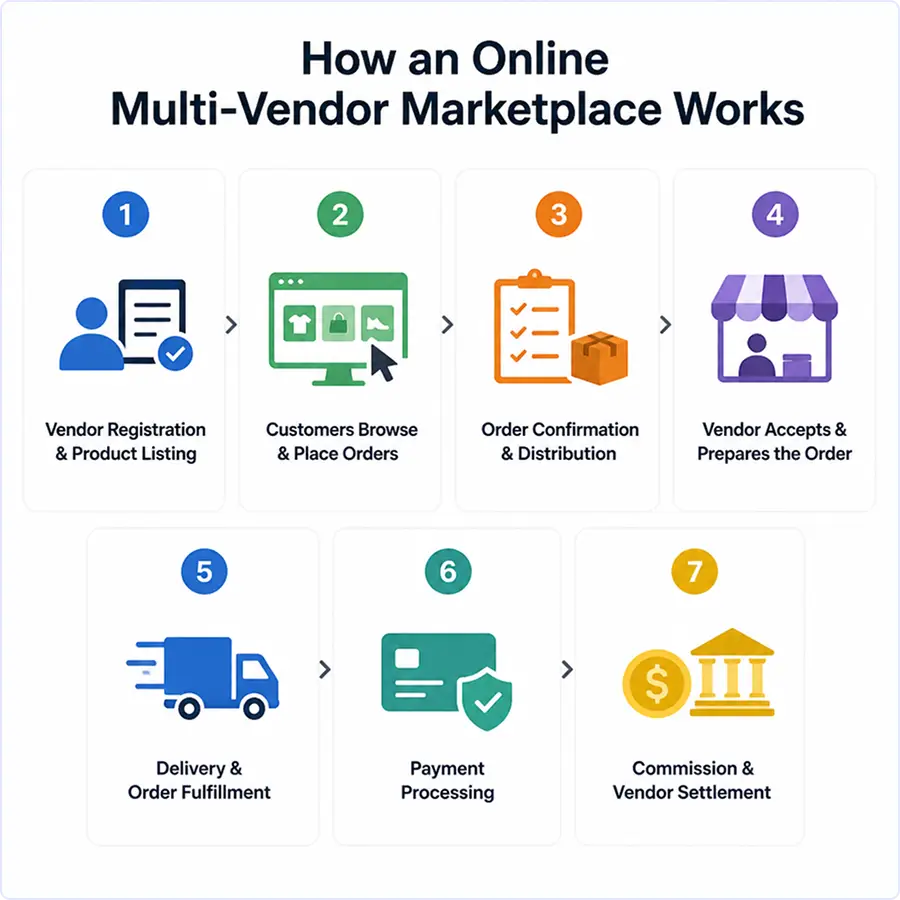
Vendor Registration & Product Listing
Vendors register on the marketplace and provide the required information. Once approved or verified, they can add products or services with details such as price, description, availability, and images.
Customer Browsing & Order Placement
Customers browse available listings, compare products or services, add items to their cart, and proceed to checkout. They provide the required order and payment details before submitting the order.
Order Confirmation & Vendor Assignment
After checkout, the marketplace records the order and identifies the relevant vendor or vendors. If an order includes products from multiple vendors, the platform may separate it into vendor-specific orders for fulfillment.
Order Preparation
The vendor receives the order and prepares the purchased items or service. For physical products, this may include picking, packing, and preparing the shipment.
Delivery & Order Fulfillment
The order reaches the customer through the vendor, the marketplace’s logistics network, or a third-party delivery provider, depending on the business model. Order status may be updated throughout the fulfillment process.
Payment Processing
The marketplace processes the customer’s payment through its supported payment system. Depending on the platform’s setup, funds may be processed or held before becoming available for vendor payout.
Commission & Vendor Settlement
The marketplace calculates its commission and other applicable fees according to its payment rules. The remaining eligible amount is then paid to the vendor through the configured payout method and schedule.
Why Multi-Vendor Marketplaces Are Booming in 2026
Multi-vendor marketplaces are growing in 2026 because they benefit all three sides of the model: customers get choice and convenience, sellers reach more demand, and owners can scale without owning inventory. According to Statista, around 30% of global consumer purchases now take place through marketplaces. In 2026, multi-vendor marketplaces are gaining momentum because they create value for both buyers and sellers.
Consumers Prefer One Platform for Everything
Today’s shoppers value convenience. Instead of visiting multiple online stores, they prefer marketplaces where they can compare products, prices, and sellers in one place.
Features like unified checkout, customer reviews, and secure payments make marketplaces the first choice for many online purchases.
A Scalable Business Model for Marketplace Owners
Multi-vendor marketplaces are attractive because they don’t require owners to maintain inventory. Vendors manage their own products, stock, and fulfillment, while the marketplace generates revenue from commissions, subscriptions, listing fees, and other services.
This creates an asset-light business model, where the marketplace can grow without having to buy and store more products itself. In simple terms, because you are not buying stock, growing your marketplace costs very little.
More Independent Sellers Are Going Online
The rise of social commerce, the creator economy, and resale businesses has encouraged millions of individuals and small businesses to sell online.
Rather than building their own websites, many choose established marketplaces to reach customers quickly, creating a larger supply of vendors for new marketplace platforms.
New Revenue Opportunities
Modern marketplaces generate income from more than just transaction fees. Many also offer sponsored listings, featured products, digital advertising, premium seller plans, and promotional tools.
These additional revenue streams increase profitability while giving vendors more ways to reach customers.
Faster and More Affordable Marketplace Development
Launching a multi-vendor marketplace has become much easier in 2026. AI-powered development tools and ready-made marketplace solutions allow entrepreneurs to build and launch platforms in weeks instead of months. This reduces development costs and lowers the barrier for businesses looking to enter the marketplace industry.
For example, a ready-made or pre-built multi-vendor marketplace solution can typically cost anywhere from $39 to $5,000, depending on its features and capabilities.
Best Online Multi-Vendor Marketplace Business Ideas for 2026
The marketplace model is expanding beyond traditional ecommerce. Explore the best multi-vendor marketplace ideas and find opportunities to build platforms that connect buyers, sellers, and service providers across growing industries.
1. Online Food Delivery Marketplace

The global online food delivery market is projected to grow from USD 350.63 billion in 2026 to USD 728.83 billion by 2034, creating opportunities for entrepreneurs to launch marketplaces that serve specific customer needs.
Food delivery marketplaces are still attractive because restaurants need digital reach, while customers want variety from one platform. Instead of competing with large food apps, entrepreneurs can focus on underserved segments such as:
- Regional food marketplaces connecting local restaurants and home chefs
- Healthy meal platforms for fitness-focused customers
- Corporate meal marketplaces serving offices and teams
- Cloud kitchen networks offering delivery-only food brands
Revenue opportunities include restaurant commissions, delivery charges, promoted listings, and subscription plans.
Example: Uber Eats, Delivery Hero, DoorDash, Grab.
2. Delivery Marketplace (Flowers, Grocery, and More)
Customers increasingly expect same-day or instant delivery for essential products. A specialized delivery marketplace can connect nearby stores with customers who need speed and convenience.
As quick commerce grows, customers are becoming more accustomed to fast delivery for groceries, flowers, and other essentials.
Potential categories include:
- Flower and gift delivery for occasions and events
- Local grocery and convenience products for quick commerce
- Specialized regional delivery services with limited competition
The platform can earn through vendor commissions, delivery fees, and priority placement for sellers.
Example: Instacart, Blinkit, Amazon Fresh, Zepto.
3. Online Rental Marketplace

Rental marketplaces create value by allowing owners to earn from assets they use occasionally while helping customers avoid high purchase costs.
High-potential rental categories include:
- Vehicle rentals for travel and daily transportation
- Equipment rentals for businesses and contractors
- Fashion rentals for weddings and events
- Adventure and outdoor gear rentals
Revenue models include booking commissions, vendor subscriptions, and listing fees.
Example: Turo, Outdoorsy, Rent the Runway
4. On-Demand Service Marketplace

Entrepreneurs can tap into this demand by building platforms that connect customers with verified service providers across specialized categories. A well-built service marketplace reduces the friction of finding reliable professionals through provider verification, transparent pricing, and seamless scheduling.
Growing service categories include:
- Home cleaning and maintenance
- Pet care services
- Babysitting and childcare
- Elderly care assistance
- Personal wellness services
Businesses can monetize through provider commissions, lead fees, and premium memberships.
Example: TaskRabbit, Thumbtack, Urban Company.
5. Healthcare & Telemedicine Marketplace

According to Precedence Research, the global telemedicine market is projected to grow from USD 188.93 billion in 2026 to approximately USD 806.89 billion by 2035, at a CAGR of 17.55%. A healthcare marketplace can solve fragmented access by connecting patients with doctors, pharmacies, diagnostic centers, and other providers through a single platform.
Business opportunities include:
- Online doctor consultations
- Medicine delivery networks
- Diagnostic test booking
- Home healthcare services
- Specialist healthcare platforms
Revenue can come from consultation fees, commissions, and healthcare partnerships.
Example: Zocdoc, Amwell, Teladoc Health.
6. eLearning Marketplace

Entrepreneurs can turn the growing interest in online education into a marketplace that connects learners with teachers, experts, and course providers. By bringing different learning options under one roof, the platform makes course discovery and enrollment simpler for learners.
Potential niches include:
- Professional skill training
- Industry certifications
- Local language courses
- Corporate training programs
- Exam preparation platforms
Platform owners can earn through course commissions, instructor subscriptions, and premium features.
Example: Udemy, Coursera, edX
7. Fashion & Apparel Marketplace

Fashion buyers often look for variety, trends, and unique brands. A marketplace can help emerging sellers reach customers without building their own stores.
Strong niches include:
- Local fashion brands
- Sustainable clothing
- Designer collections
- Custom apparel
- Modest fashion markets
Revenue comes from seller commissions, featured listings, and advertising packages.
Example: ASOS, Farfetch, Joor.
8. B2B Wholesale Marketplace

The global B2B e-commerce market is projected to grow from USD 36.86 trillion in 2026 to USD 61.66 trillion by 2031, at a CAGR of 10.84%, according to Mordor Intelligence, showing massive growth potential for digital commerce platforms. As businesses look for faster ways to find suppliers, compare prices, and manage bulk purchases, B2B marketplaces can bring manufacturers, wholesalers, and retailers together in one place.
Potential online marketplace opportunities include:
- Industry-specific wholesale platforms for fashion, electronics, construction, or industrial goods
- Regional supplier marketplaces connecting local manufacturers with retailers
- Bulk ordering platforms for small businesses and resellers
- Procurement marketplaces with supplier verification and business tools
Revenue models include supplier subscriptions, transaction commissions, featured listings, and premium business accounts.
Example: Amazon Business, Faire, Ankorstore.
9. Agriculture & Farmer Marketplace

The digital agriculture marketplace is expected to grow from USD 18.59 billion in 2026 to USD 49.42 billion by 2034, creating opportunities for agricultural platforms. These marketplaces can simplify crop trading and bring farmers, buyers, suppliers, and service providers together on one platform. They support both agricultural trading and farm-related services.
Potential opportunities include:
- Farm-to-consumer marketplaces for fresh produce
- Wholesale crop trading platforms connecting farmers with bulk buyers
- Agricultural supply marketplaces for seeds, equipment, and fertilizers
- Farm equipment rental platforms for small-scale farmers
Revenue can come from transaction fees, supplier listings, logistics services, and value-added tools.
Example: CropData, BigHaat, e-agro, AgriBazaar.
10. Real Estate Marketplace

Property buyers and renters often face challenges finding verified listings and connecting with reliable agents. A real estate marketplace can organize property search, communication, and lead generation in one platform.
However, unlike many marketplace categories, real estate has low repeat-purchase frequency. A customer may buy or sell a property only once in several years, so founders must account for higher customer acquisition costs and ensure each transaction generates enough value to justify that expense.
Business opportunities include:
- Residential property marketplaces for buying and renting homes
- Commercial real estate platforms for offices and business spaces
- Student housing marketplaces near universities
- Luxury property marketplaces targeting premium buyers
Monetization options include listing fees, featured properties, agent subscriptions, and advertising.
Example: Rightmove, Redfin, Trulia.
11. Freelancer Marketplace

Businesses increasingly hire remote professionals for specialized work. A marketplace can connect companies with verified experts while simplifying hiring, payments, and project management.
Potential niches include:
- Technology talent marketplaces for developers and IT specialists
- Creative service platforms for designers, writers, and marketers
- Local professional service networks
Revenue opportunities include project commissions, freelancer memberships, and business subscriptions.
Example: Upwork, Fiverr, Toptal, Contra.
12. Online Fitness Marketplace

As online fitness adoption continues to rise, the market is projected to reach USD 120.13 billion by 2031. Entrepreneurs can build specialized fitness marketplaces that connect users with personal trainers, wellness coaches, and digital fitness programs based on specific goals and preferences.
Potential marketplace models include:
- Gym and studio booking platforms
- Personal trainer marketplaces
- Online fitness coaching platforms
- Nutrition and wellness service marketplaces
Revenue can come from booking fees, trainer commissions, memberships, and premium subscriptions.
13. Travel Activity & Booking Marketplace

The growing demand for convenient travel planning is creating new opportunities for online marketplaces. The online travel booking market is expected to grow to USD 1.13 trillion by 2030, creating opportunities for experience-focused marketplaces. These platforms can help travelers discover and book activities while allowing local providers to reach a wider audience.
Potential opportunities include:
- Local tour and activity marketplaces
- Adventure experience platforms
- Food and cultural experience marketplaces
- Travel service marketplaces for niche destinations
Revenue models include booking commissions, provider subscriptions, and promoted experiences.
Example: Airbnb, Peek, Musement.
14. Expert Consultation Marketplace

Many customers need professional advice but struggle to find trusted experts. A consultation marketplace can connect users with specialists through scheduled online sessions.
Potential categories include:
- Business and startup consulting
- Legal consultation
- Financial advisory
- Career coaching
- Health and wellness guidance
Platforms can generate revenue through consultation commissions, expert memberships, and premium listings.
Example: GLG, Catalant, Clarity.fm.
15. Furniture Marketplace

With the online furniture market expected to reach USD 202.33 billion by 2031, entrepreneurs can build marketplaces that solve common challenges in furniture shopping. By connecting multiple sellers, manufacturers, and designers, these platforms can offer customers more choices while helping businesses reach a wider digital audience.
Potential opportunities include:
- Custom furniture marketplaces connecting customers with craftsmen
- Home and office furniture platforms
- Affordable furniture marketplaces for budget-conscious buyers
- Sustainable furniture marketplaces featuring eco-friendly products
Revenue streams include seller commissions, featured product placements, and vendor subscription plans.
Example: IKEA, Wayfair.
How Do Multi-Vendor Marketplaces Make Money?
Multi-vendor marketplaces make money through commissions, subscriptions, listing and registration fees, advertising, and membership fees. A marketplace does not have to rely on a single revenue source. Combining multiple income streams can help platform owners build more stable revenue and support long-term growth.
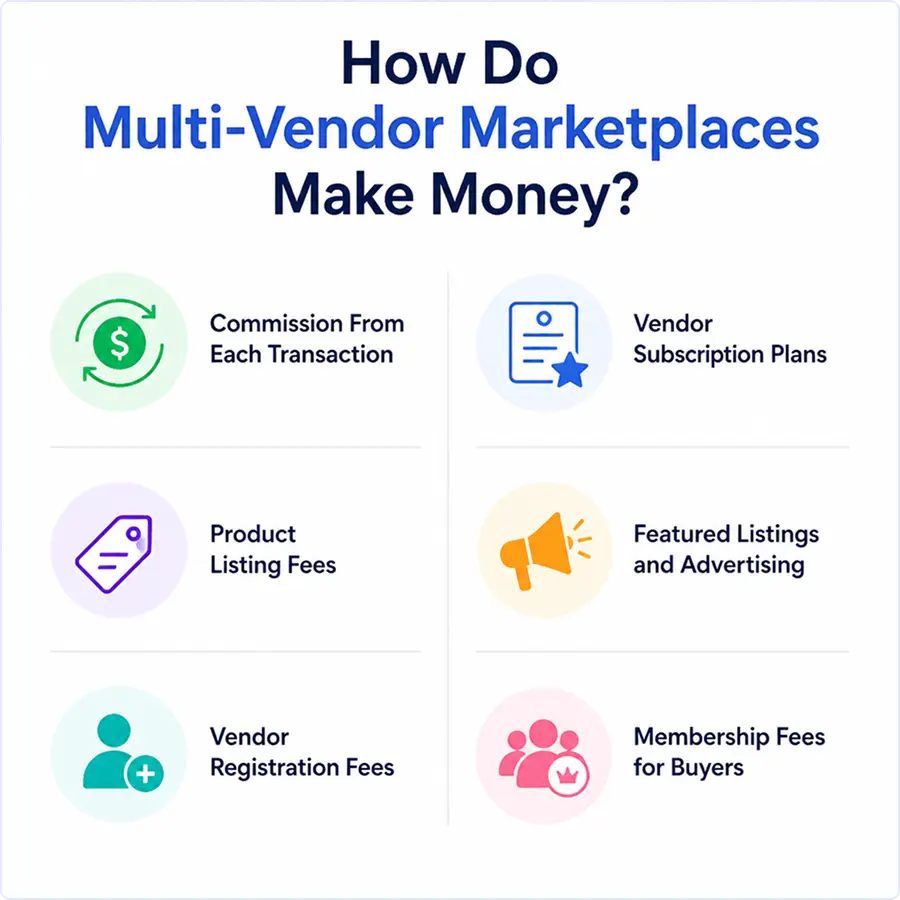
Commission From Each Transaction
The commission model is the most widely used marketplace revenue strategy. The platform owner earns a percentage from every order, booking, or service completed through the marketplace.
The commission rate can vary based on the industry, product category, and value provided to sellers. For example, categories with higher profit margins can support higher commissions, while competitive categories may require lower rates to attract more vendors.
Vendor Subscription Plans
Marketplace owners can charge sellers a recurring fee to access the platform and its selling features. This creates predictable revenue even before vendors generate sales.
Subscription plans can offer different benefits, such as:
- Higher product listing limits
- Better store visibility
- Sales analytics
- Marketing tools
- Lower commission rates
Many marketplaces use a combination of subscription fees and transaction commissions to balance recurring income with sales growth.
Product Listing Fees
Some marketplaces charge vendors for adding products, services, or listings beyond the limits included in their plan. This model works well for platforms with high-value listings, such as real estate, jobs, and specialized products.
Listing fees can also be used for premium placements, allowing sellers to increase their visibility on the platform.
Featured Listings and Advertising
Sellers can pay to promote their products or stores within the marketplace. These paid visibility options help vendors attract more customers while creating an additional revenue stream for the platform owner.
Common options include:
- Featured products
- Sponsored listings
- Homepage promotions
- Category advertisements
Vendor Registration Fees
Some marketplaces charge sellers a one-time registration or onboarding fee to join the platform. This approach can help cover verification, setup, or support costs while ensuring seller commitment.
However, many new marketplaces avoid high entry fees initially to attract more vendors.
Membership Fees for Buyers
Some marketplaces create premium membership programs for customers. Subscribers may receive benefits such as discounts, free delivery, exclusive deals, or early access to products.
This model works especially well for marketplaces with frequent customer purchases.
Also Read: Complete eCommerce Mobile App Development: A Detailed Guide
How Do You Choose the Right Marketplace Business Idea?
Having many business ideas is a good start, but choosing the right one requires more than following a trend. Look at your strengths, market demand, competition, costs, and growth potential before making a decision.
Use Your Existing Skills
Your knowledge and experience can give you an advantage when entering a new market. Consider the skills, industry knowledge, and connections you already have. Starting with something you understand can help you make better decisions and avoid common mistakes.
Research Market Demand
A good business idea solves a real problem or meets a clear customer need. Talk to potential customers, study competitors, check search trends, and look for gaps in existing solutions. A specific niche can also help you target a clear audience instead of competing with everyone.
Study the Competition
Competition can show that a market already has demand, but you need to understand how existing businesses serve customers. Identify what they do well, where they fall short, and what you can offer differently. A clear competitive advantage can make it easier to attract customers.
Check the Numbers
Make sure the business can generate enough revenue to cover its costs and leave room for profit. Consider development, inventory, marketing, staff, delivery, technology, licenses, and other operating expenses. Compare these costs with your expected pricing and sales volume before investing heavily.
Consider Your Budget and Resources
Choose an idea that matches the resources you can realistically invest. A business that requires large upfront capital may not be suitable if you have a limited budget. In some cases, starting with a focused niche or a ready-made technology solution can reduce the initial investment.
Test the Idea Before Scaling
You do not need to build the full business on day one. Start by testing your concept with a small target audience, pilot service, landing page, or minimum viable product. Customer feedback can help you validate demand and identify changes before you make a larger investment.
Think About Long-Term Growth
Finally, consider whether the idea can grow beyond its initial market. Look at opportunities to add new products, services, locations, vendors, or customer segments. A business idea with room to scale can offer stronger long-term potential than one that depends on a very limited market.
How Do You Build and Launch a Multi-Vendor Marketplace?
Building a multi-vendor marketplace depends on your budget, timeline, and business goals. Entrepreneurs typically choose between two approaches: custom marketplace development or a ready-made marketplace solution.
1. Custom Marketplace Development
A custom-built marketplace gives you complete control over the platform’s features, design, workflows, and scalability. This approach is suitable for businesses with unique requirements or those planning to build a highly differentiated marketplace.
The development process usually includes:
- Defining marketplace features and business model
- Designing buyer, seller, and admin experiences
- Developing web and mobile applications
- Integrating payments, shipping, notifications, and other services
- Testing, launching, and maintaining the platform
While custom development offers maximum flexibility, it requires higher investment, longer development time, and ongoing technical resources. Custom marketplace development can cost from around $60,000 for a focused platform to $300,000 or more for a fully customized solution.
2. Ready-Made Marketplace Solution
A ready-made marketplace solution allows entrepreneurs to launch faster by using a pre-built platform with essential marketplace features already developed. It reduces development costs and eliminates the need to build every component from scratch.
Solutions like 6Valley are designed for businesses that want to launch a multi-vendor ecommerce platform with essential features already available.

6Valley provides exclusive features apart from the basic ones, such as:
- AI-powered Chatbot
- Variable Business Model (From single to multi-vendor)
- Proof of delivery
- Social Login
- Product SEO
- Bilt-in-POS
- Support Ticket
- Mobile apps and web platforms
- Product and order management
- Payment gateway integration
With a ready-made solution, businesses can customize branding, configure marketplace settings, onboard vendors, and launch their platform faster.
The right approach depends on your marketplace vision. Custom development works best for complex, unique ideas, while ready-made solutions are ideal for entrepreneurs who want to validate their business model and enter the market quickly.
Common Mistakes to Avoid When Launching a Multi-Vendor Marketplace
Building a marketplace is more complex than launching a regular ecommerce store. You need to manage two sides of the platform, sellers and customers, while creating enough value for both. Avoiding these common mistakes can improve your chances of long-term success.
Launching Without Solving the Supply-Demand Balance
A marketplace needs both vendors and customers to succeed. Launching with only one side available can make the platform feel empty. Start by building a strong vendor base, securing product or service availability, and then attract customers with enough options to create engagement.
Skipping Market Validation
Not every marketplace idea has enough demand to succeed. Before investing heavily in development, research your target users, analyze competitors, and validate whether customers and vendors actually need your solution.
Building Like a Traditional Ecommerce Store
A marketplace is not just an online store with multiple products. You are managing relationships between buyers and independent sellers. Your platform needs features for vendor onboarding, seller management, commissions, payouts, and dispute handling.
Making Vendor Management Difficult
Vendors are the backbone of a marketplace. A complicated registration process, unclear policies, or limited seller tools can prevent quality vendors from joining. Provide simple onboarding, easy product management, and clear support resources.
Scaling Before the Platform Is Ready
Expanding too early can increase costs before your marketplace has a stable foundation. Focus on improving operations, fixing user problems, and building a strong presence in one market before moving into new regions.
Ignoring User Experience and Mobile Performance
A complicated buying process can drive customers away. Since many users access marketplaces through mobile devices, ensure fast loading, simple navigation, smooth checkout, and a mobile-friendly experience.
Recommended Reading:
Conclusion
Exploring online multi-vendor marketplace business ideas is the first step toward identifying new digital business opportunities in 2026. As customers prefer platforms that offer more choices and convenience, businesses can create marketplaces across industries such as retail, healthcare, travel, education, and professional services.
This blog explores high-potential marketplace ideas, from food delivery and rental platforms to B2B, healthcare, and service marketplaces. It helps entrepreneurs understand different opportunities, target markets, and business potential before choosing the right marketplace model.
If you have identified an opportunity worth pursuing, the next step is to choose a marketplace solution that can turn your idea into a working platform.
FAQs
What are the best online multi-vendor marketplace profitable marketplace business ideas for 2026?
Some promising marketplace ideas for 2026 include online food delivery, healthcare marketplaces, rental platforms, B2B wholesale marketplaces, eLearning platforms, travel activity marketplaces, freelancer marketplaces, and niche ecommerce marketplaces.
How does a multi-vendor marketplace make money?
Multi-vendor marketplaces generate revenue through different models, including transaction commissions, vendor subscription plans, listing fees, featured promotions, advertising, and additional seller services.
Is starting a multi-vendor marketplace profitable?
A multi-vendor marketplace can be profitable when it solves a specific market problem, attracts quality vendors, and builds a strong customer base. Success depends on choosing the right niche, creating value for both buyers and sellers, and having a scalable revenue model.
How do I choose the right marketplace idea?
Choose a marketplace idea based on market demand, customer pain points, competition, available vendors, and revenue potential. Focusing on a specific niche can help new marketplaces compete with larger platforms.
Should I build a custom marketplace or use a ready-made solution?
A custom marketplace is suitable for businesses with unique requirements and larger budgets. A ready-made marketplace solution is a better option for entrepreneurs who want to launch quickly with proven marketplace features and lower development effort.
How do I attract sellers to a new marketplace?
New marketplaces can attract vendors by offering easy onboarding, competitive fees, marketing support, promotional opportunities, and tools that help sellers manage their business efficiently.

Say hello to Fatema! A creative technical writer who is resilient in crafting words to bring her readers informative content. With her Computer Science background and passion for writing, she turns complicated ideas into compelling content. When Fatema isn’t writing she enjoys watching series, reading books and listening to music.